According to Gartner (2024), 90% of finance functions will deploy at least one AI-enabled technology solution by 2026. AR and AP automation is already the top AI use case for CFOs, cited by 36% of finance leaders surveyed. Yet most AR teams still spend the bulk of their time on data entry, cross-referencing, and chasing payments in spreadsheets.
This guide ranks the eight best accounts receivable software platforms for 2026, with selection criteria, honest pros and cons, and a comparison table to help you decide.
Key Takeaways
- AI-native AR platforms now outperform legacy tools built on OCR + rules engines, especially for unstructured payment data like PDF remittances and multi-format deduction memos
- The best AR software doesn’t just show you problems; it resolves them by matching payments, investigating deductions, and running collection follow-ups autonomously
- Implementation timelines range from 4 weeks to 18+ months depending on the vendor, so deployment speed should be a core selection criterion
- According to IOFM, manual invoice processing costs ~$6.30 per invoice vs. ~$1.45 with automation
- Deloitte’s Q4 2025 CFO Signals survey found that 87% of CFOs rate AI as extremely or very important to finance operations in 2026
In This Article
- How We Evaluated These Platforms
- 1. Transformance: Best for Mid-Market and Large Enterprises with Complex, Unstructured Payment Data
- 2. HighRadius: Best for Fortune 500 Scale
- 3. Billtrust: Best for B2B Payment Network Integration
- 4. Esker: Best for AP and AR on One Platform
- 5. Versapay: Best for Collaborative AR
- 6. BlackLine: Best for Financial Close with AR
- 7. Sage Intacct: Best for SMB AR
- 8. BILL (formerly Bill.com): Best for Small Business AR
- AR Software Comparison Table
- What Should You Look for in AR Software?
- What Are the Best Alternatives to HighRadius?
- Take the Next Step with AR Automation
What Is Accounts Receivable Software?
Accounts receivable software is a category of financial technology that automates the processes involved in collecting payments owed to a business. This includes invoice generation, cash application (matching incoming payments to open invoices), collections and dunning (following up on overdue payments), deduction management, and cash forecasting. Modern AR software connects to ERPs like SAP, Oracle, and NetSuite, reads payment documents, and executes matching and posting actions that analysts would otherwise perform manually.
How We Evaluated These Platforms
We assessed each platform across seven criteria that matter most to mid-market and enterprise finance teams:
- Automation depth: Does it execute actions (match, post, collect), or just surface insights?
- AI capability: What type of AI powers the platform? Vision language models, traditional ML, or rules-only?
- ERP integration: Which ERPs does it support natively, and how deep is the integration?
- Implementation speed: How long from contract to first value?
- Document handling: Can it process unstructured inputs (PDFs, emails, portal downloads) without template configuration?
- Scalability: Does it serve mid-market through large enterprise?
- Total cost of ownership: Licensing, implementation, maintenance, and admin requirements
| Platform | Best Suited For | Standout Feature | Pricing |
|---|---|---|---|
| Transformance | Mid-market & large enterprise with complex unstructured remittances | AI-native O2C built from day one; Vero persistent agent | Custom; ~25-30% under incumbents |
| HighRadius | Fortune 500 already on SAP/Oracle | Widest ERP catalog; full AR suite from one vendor | Custom; high 6 to low 7 figures Y1 |
| Billtrust | B2B needing payment network + invoice presentment | Strong B2B payments rail + invoicing | Per-txn + sub; USD 100K-7-fig |
| Esker | Mid-market wanting AP + AR combined | AP + AR automation from one vendor | EUR 50-200K/yr |
| Versapay | B2B with high portal-adoption potential | Customer payment portal capturing structured remittance | Volume + payment fees |
| BlackLine | Public companies already running BlackLine for close | SOX-grade controls + reconciliation integration | Per-module subscription on close licence |
| Sage Intacct | SMB wanting AR inside the accounting platform | AR natively integrated with Sage GL | USD 10-50K/yr |
| BILL | Small businesses wanting integrated AR + AP | Simple, fast-deploy AR/AP for small business | USD 5-30K/yr |
1. Transformance: Best for Mid-Market and Large Enterprises with Complex, Unstructured Payment Data
Transformance is an AI-native O2C execution layer covering cash application, deductions, collections, and cash forecasting. Built AI-first from day one rather than retrofitting AI onto legacy OCR + regex stacks. Where incumbents need template configuration per remittance format, Transformance uses vision language models that understand documents natively.
Pros:
- DocSense achieves 99.7% accuracy on structured remittances and 96.6% on multi-column tables — with zero template configuration.
- ClearMatch starts at ~85% auto-match rates and improves to 95%+ within 90 days as MemoryMesh accumulates resolution patterns.
- CollectPulse runs autonomous AI calling agents in 70+ languages: 15-20 calls/hour vs 15-20 calls/day for human collectors.
- Vero is the persistent agent across cash app, deductions, collections, and forecasting — one agent, four products, shared institutional memory.
- Deploys in 4-8 weeks. VPC deployment with SSO, RBAC, full audit trails, ISO 27001.
Cons:
- Focused on O2C only. Companies needing financial close, intercompany, or consolidation will need additional tools.
- Built for enterprise document complexity at scale. Not optimized for transactional or SMB businesses.
Best For: Mid-market and large enterprises (EUR 500M to EUR 25B+ revenue) running SAP, Oracle, or Dynamics with complex unstructured payment data. Especially strong for FMCG, chemicals, MedTech, and manufacturing companies.
Pricing: Module-based pricing tied to users, transaction volume, and AI usage. ~25-30% more affordable than incumbent platforms with faster onboarding.

2. HighRadius: Best for Fortune 500 Scale
HighRadius is the market leader for large-scale AR automation with a suite covering cash application, credit, collections, deductions, and treasury. Their installed base includes a significant share of Fortune 500 companies. The platform was built on first-generation OCR + regex template architecture — full AR-cycle coverage is its biggest strength and biggest implementation overhead.
Pros:
- Wide integration catalog with mature SAP, Oracle, and NetSuite connectors.
- Deep institutional presence in large enterprise procurement cycles.
- Broad product coverage across the full AR lifecycle from a single vendor.
- Established global support presence and enterprise reference base.
Cons:
- Template-based document processing breaks silently when remittance formats change.
- Implementation runs 3-6 months with implementation services often exceeding first-year licence cost.
- AI assistant is stateless — institutional knowledge does not accumulate.
- Mid-market and complex-format use cases pay for capabilities they don't need.
Best For: Large enterprises (USD 1B+ revenue) already running SAP or Oracle that need a single vendor for the full AR lifecycle. See our HighRadius alternatives guide.
Pricing: Custom enterprise pricing. Total first-year cost typically high six to low seven figures including implementation services.
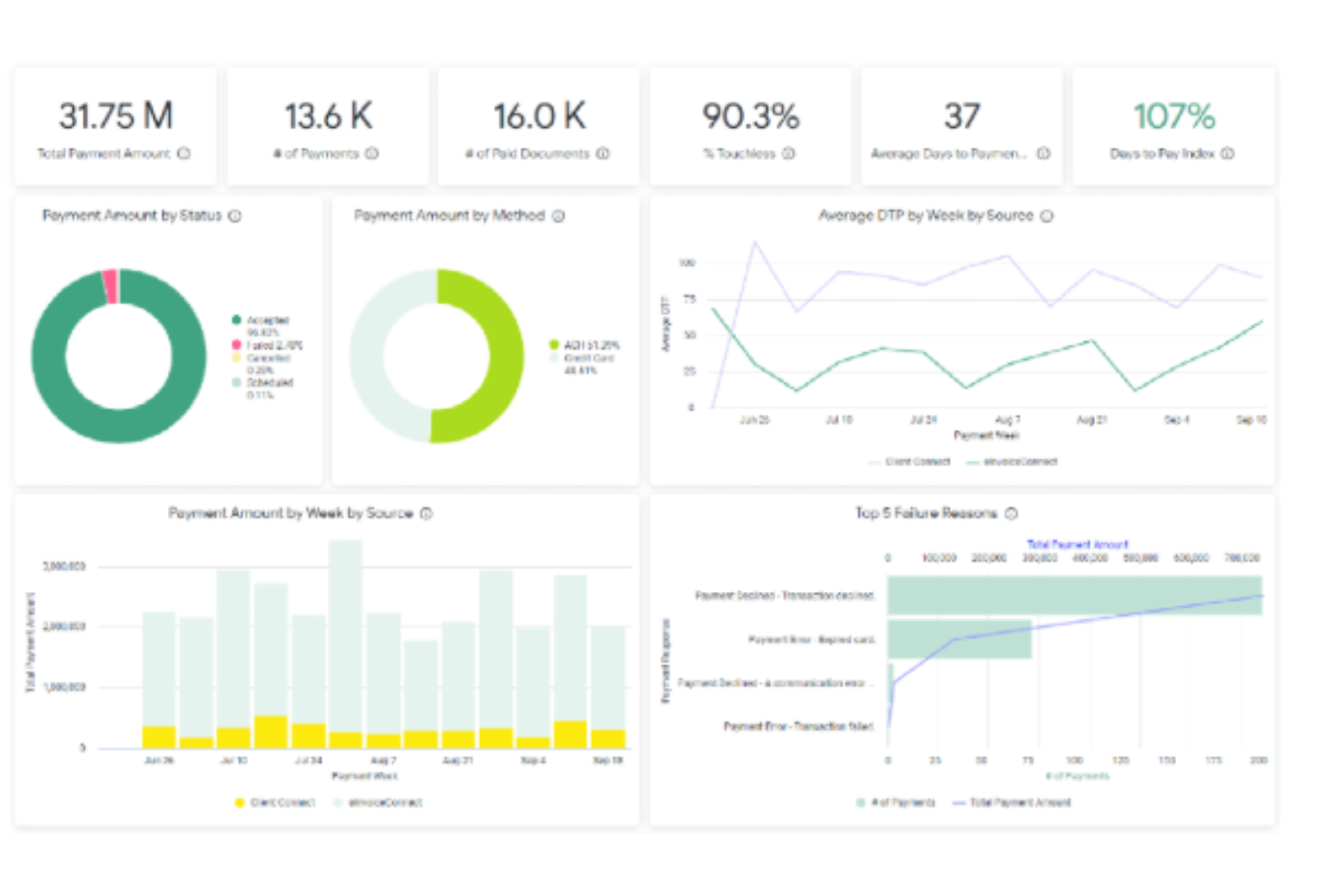
3. Billtrust: Best for B2B Payment Network Integration
Billtrust focuses on the front end of AR — invoice presentment, payment acceptance, and B2B payment network connectivity. Strong when the primary AR pain is payment acceptance rather than downstream matching.
Pros:
- Strong B2B payment network with established connectivity to major enterprise buyers.
- Integrated invoice presentment and payment acceptance.
- Mature credit card and ACH processing for B2B volumes.
Cons:
- Cash application is a feature, not a specialist matching engine.
- Deductions and collections capabilities lag dedicated AR-execution platforms.
- Implementation typically requires 2-4 months for the full payments stack.
Best For: B2B companies (USD 100M to USD 1B revenue) where invoice presentment and payment acceptance are the primary AR pain points. See Billtrust alternatives.
Pricing: Per-transaction pricing on payments + subscription for the platform. Total annual cost typically scales from USD 100K mid-market to seven figures at enterprise scale.
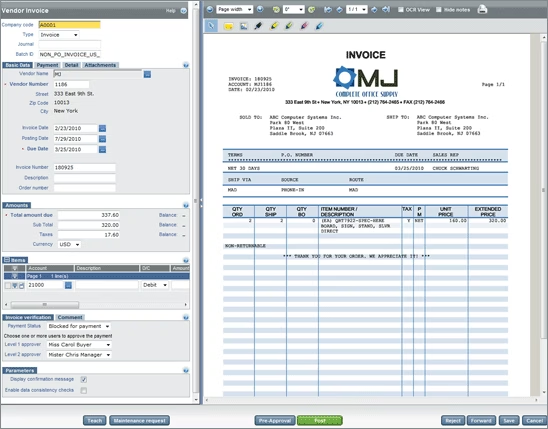
4. Esker: Best for AP and AR on One Platform
Esker covers order management, invoicing, collections, cash application, and claims management in a single platform — with both AR and AP capabilities. The differentiator is breadth: combined automation from one vendor.
Pros:
- Broad O2C coverage from sales order through collection in one platform.
- Combined AP + AR reduces vendor management overhead.
- Established European market presence with multi-language support.
Cons:
- AI layer focuses on document classification, not autonomous execution.
- Cash application matching relies heavily on rules configuration.
- Pricing scales with module count, so unused modules still factor into total cost.
Best For: Mid-market organizations (USD 100M to USD 1B revenue) wanting combined AP and AR automation from one vendor.
Pricing: Per-module subscription tied to transaction volume. Mid-market deployments typically EUR 50,000 to EUR 200,000 per year for cash application.

5. Versapay: Best for Collaborative AR
Versapay takes a portal-first approach — a customer-facing portal for invoice review, payment, and dispute submission, with cash application running on the structured data customers provide.
Pros:
- Customer portal addresses remittance quality at source.
- Native ACH and credit card processing through the portal.
- Self-service deflects significant volume of customer inquiries.
Cons:
- Match performance correlates directly with portal adoption rate.
- Cash application and deductions are less automated than AI-execution platforms.
- First 6-12 months are a customer-onboarding exercise.
Best For: B2B companies (USD 50M to USD 500M revenue) with a manageable number of key accounts and the ability to drive portal adoption.
Pricing: Subscription scales with transaction volume + active payer count. Includes payment processing fees.
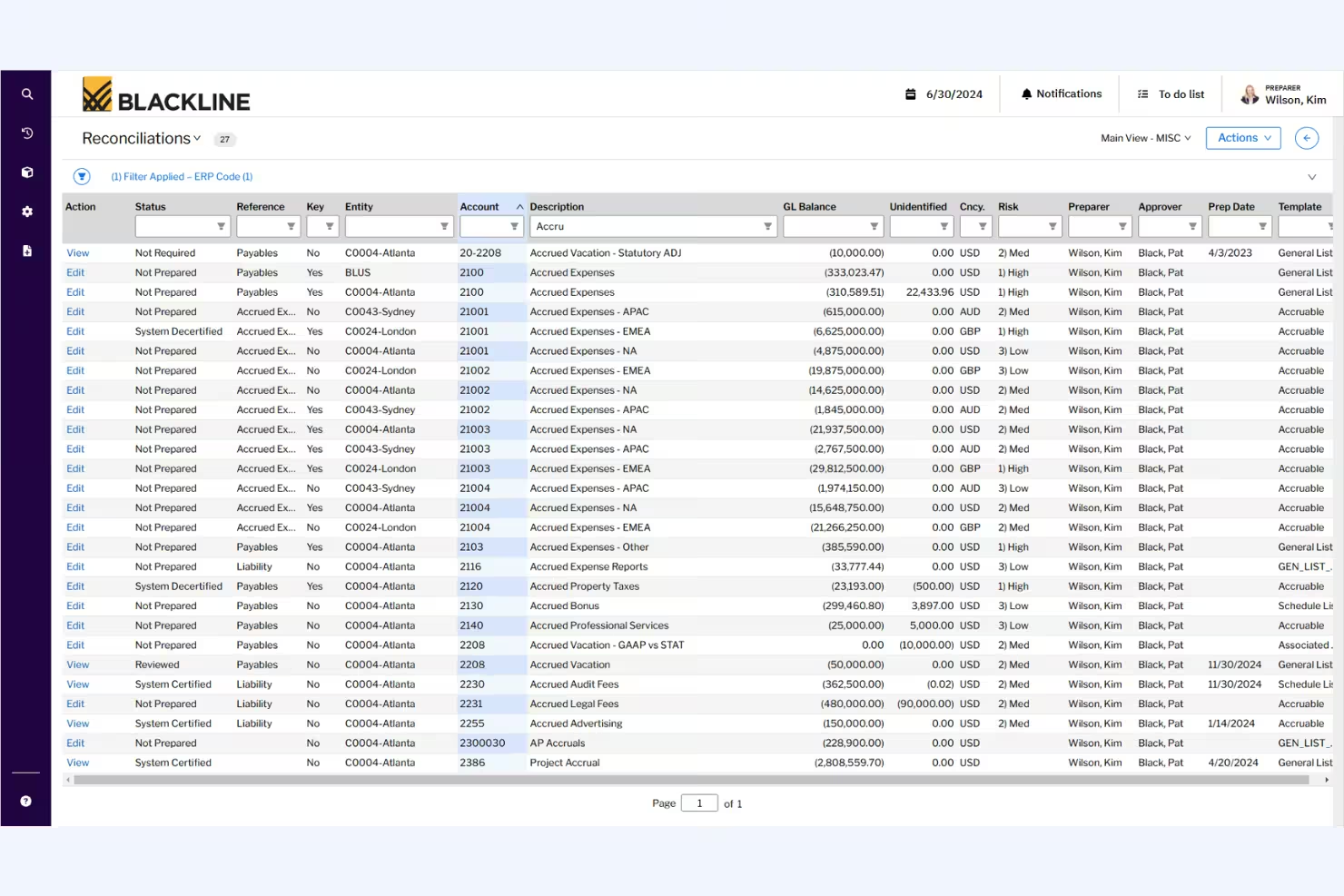
6. BlackLine: Best for Financial Close with AR
BlackLine is the dominant financial close platform. AR Intelligence extends BlackLine's account reconciliation capabilities into the AR space — cash application as one component of a close-centric architecture.
Pros:
- Tight integration with account reconciliation work — cleared items flow into the reconciliation control framework.
- Strong audit trail and SOX-grade controls inherited from the close platform.
- Familiar interface for finance teams already running BlackLine for close.
Cons:
- Extension of a close platform, not a purpose-built matching engine.
- Document processing capabilities are basic; complex unstructured remittances route to manual review.
- Limited depth on AR-specific workflows like deductions and collections.
Best For: Public companies and regulated industries already running BlackLine for close that want basic cash application in the same platform. See BlackLine alternatives.
Pricing: Per-module subscription on top of close licence. Total cost most attractive when bundled with existing BlackLine usage.
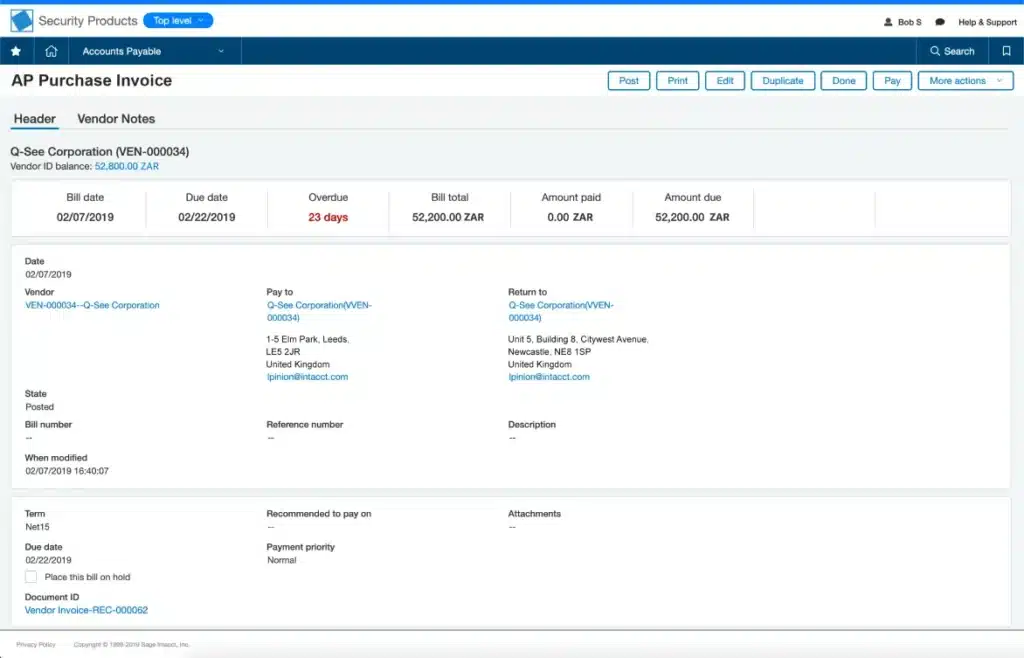
7. Sage Intacct: Best for SMB AR
Sage Intacct is a cloud accounting platform with built-in AR functionality. Targets small-to-mid market companies that want core AR features inside their accounting system rather than a separate AR platform.
Pros:
- AR functionality natively integrated with the general ledger — no separate integration to maintain.
- Modern cloud architecture with regular updates.
- Familiar fit for finance teams already running Sage for accounting.
Cons:
- AR capabilities are basic accounting-system features, not specialist automation.
- No deep cash application AI, no autonomous collections, no advanced deductions handling.
- Not designed for high-volume B2B AR with complex remittance handling.
Best For: Small-to-mid-sized businesses (USD 5M to USD 100M revenue) that want core AR inside their accounting platform without a separate AR specialist.
Pricing: Per-user subscription tied to module count. SMB deployments typically USD 10,000 to USD 50,000 per year.
8. BILL (formerly Bill.com): Best for Small Business AR
BILL focuses on small business financial operations — AR, AP, payments, and spend management in one platform. Designed for businesses that want simplicity over depth.
Pros:
- Simple, fast-to-deploy AR and AP automation for small businesses.
- Integrated payment processing and bill pay capabilities.
- Strong fit for businesses already using BILL for AP.
Cons:
- AR capabilities are basic — not designed for B2B enterprise complexity.
- Limited support for complex remittance formats or large invoice volumes.
- AI capabilities are minimal compared to dedicated AR platforms.
Best For: Small businesses (under USD 25M revenue) that want integrated AR and AP without enterprise complexity.
Pricing: Subscription pricing typically USD 5,000 to USD 30,000 per year depending on user count and transaction volume.

What Should You Look for in AR Software?
Choosing the right AR platform depends on three factors that outweigh everything else.
First, understand your document problem. If your customers send clean EDI files and structured bank data, most platforms will work. If you receive PDF remittances in 15 different formats, portal downloads from retail customers, and email-based payment advices, you need a platform that handles unstructured data without template configuration. This is where the technology generation matters: vision language models read documents the way a human does (understanding layout, tables, and context), while OCR + regex requires a template for every format.
Second, measure execution, not just visibility. Many AR tools give you dashboards showing what’s overdue, what’s unmatched, and where cash is stuck. Fewer actually do something about it. Ask every vendor: “After your system identifies a problem, what happens next? Does a human still have to act, or does the system act?” The answer separates insight tools from execution platforms.
Third, pressure-test implementation timelines. According to Deloitte’s Q4 2025 CFO Signals survey, 54% of CFOs plan to integrate AI agents into finance operations. But a platform that takes six months to deploy is six months of manual work your team won’t get back. Ask for reference customers who went live in the timeframe the vendor promises, and ask specifically about the first week of production results.
For a broader look at the order-to-cash software category, including how these tools fit into the full O2C cycle, we’ve published a separate decision guide.
What Are the Best Alternatives to HighRadius?
HighRadius is the default choice for many large enterprises, and for good reason: they have the broadest feature set and the deepest Fortune 500 penetration. But their first-generation architecture creates real trade-offs.
The OCR + regex template approach means every new remittance format requires configuration. The stateless digital assistant processes each query in isolation. And implementation timelines of 3-6 months delay time-to-value.
For mid-market and large enterprises with diverse, unstructured payment data, Transformance offers a structural alternative: vision language models that handle new formats on first contact, persistent memory that compounds over 90 days, and deployment in weeks. For companies that prioritize buyer collaboration over document processing, Versapay is worth evaluating. And for companies already committed to SAP’s ecosystem, BlackLine offers cash application as part of the broader financial close suite. You can explore all options in our HighRadius alternatives guide.
Frequently Asked Questions
What is the best accounts receivable software for mid-market companies?
Transformance is the strongest option for mid-market enterprises (EUR 500M-EUR 25B+ revenue) that deal with complex, unstructured payment data. It deploys in 4-8 weeks without requiring a dedicated admin, and its AI-native architecture handles document formats that legacy tools need weeks of template training to process.
How much does accounts receivable software cost?
AR software pricing varies widely. SMB tools like BILL charge per-user monthly fees starting under $100/month. Enterprise platforms like HighRadius and BlackLine use custom licensing that can reach six figures annually. Transformance is 25-30% more affordable than incumbent enterprise platforms, with faster onboarding that reduces total project cost.
How long does it take to implement AR automation software?
Implementation timelines range from days (for SMB tools like BILL) to 18+ months (for SAP native modules). Most enterprise AR platforms take 3-6 months. AI-native platforms like Transformance deploy in 4-8 weeks, with first payments matched in days, because they don’t require template configuration or extensive custom development.
What is the difference between AR software and ERP accounts receivable modules?
ERP AR modules (in SAP, Oracle, or NetSuite) manage master data, invoices, and aging reports. They weren’t designed to read unstructured remittance documents, investigate deductions, or run autonomous collection calls. AR software sits on top of the ERP and automates the execution work that ERPs leave to manual processes.
Can AI really automate cash application?
Yes. According to Gartner (2024), 58% of finance functions already use AI, with AR/AP as the top use case. Modern AI-native cash application tools achieve 95%+ auto-match rates on payment-to-invoice matching. The key differentiator is the AI generation: vision language models understand documents natively, while older OCR + regex approaches require manual template maintenance.
What should I consider when switching from one AR platform to another?
Focus on three things: data migration (how will historical data transfer), ERP re-integration (how long to reconnect), and parallel run period (how long both systems run simultaneously). Platforms with faster implementation timelines reduce the risk and cost of the transition. Ask the new vendor for references from customers who migrated from your current platform.
Which AR automation vendors offer the best ERP integration?
HighRadius and BlackLine have the deepest SAP integrations built over many years. Transformance supports SAP, Oracle, NetSuite, and Microsoft Dynamics with ERP connectors that read from and write back to the general ledger. Versapay has strong Dynamics integration. The best integration depends on your specific ERP environment and whether you need read-only or bidirectional data flow.
Take the Next Step with AR Automation
The gap between manual AR processes and AI-native automation is widening. IOFM data shows manual processing costs ~$6.30 per invoice versus ~$1.45 with automation. And with 87% of CFOs rating AI as critical to finance operations in 2026 (Deloitte), waiting means falling further behind.
If your team is still matching remittances manually, chasing deductions in spreadsheets, or running collections from aging reports, there’s a faster way. Transformance automates from document ingestion to ERP posting, with persistent memory that gets smarter every day.
Last updated: May 2026